
The Future of eLearning Video Production
In partnership with invideo
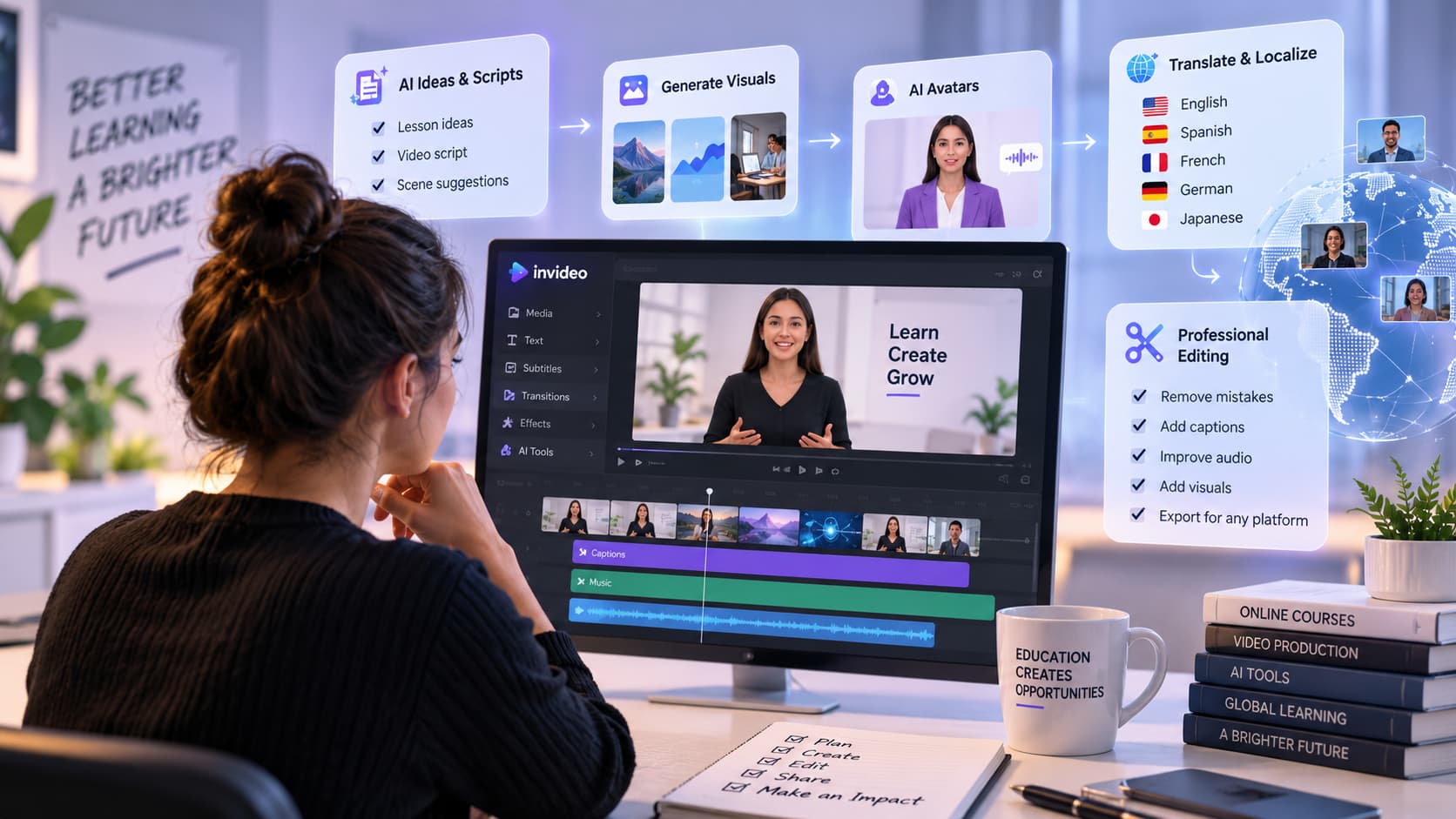
The way people learn online has changed dramatically over the past few years. Video-based learning has become the foundation of many successful online courses, helping educators explain complex ideas, demonstrate practical skills, and create engaging learning experiences.
However, producing high-quality educational videos has traditionally been a challenging process.
Behind every professional-looking course video is usually a long production workflow involving scripting, recording, editing, visual design, audio processing, subtitles, and publishing. For individual educators and small course businesses, managing all these steps can become a major barrier.
Artificial intelligence is now changing this process.
AI is not just improving video editing; it is transforming the entire eLearning production cycle. From planning lessons and generating visuals to creating personalized learning experiences, AI-powered tools are helping educators create better content faster and at a larger scale.
The future of online course creation will not simply be about recording lectures. It will be about combining teaching expertise with intelligent technology to create more engaging, accessible, and scalable learning experiences.
Why Traditional eLearning Video Production Is Difficult to Scale
Creating an online course requires much more than knowledge about a topic.
An instructor may have years of expertise in a subject, but turning that knowledge into professional educational content requires additional skills.
A typical course production process involves:
- Planning lesson structures
- Writing scripts
- Recording videos
- Editing mistakes
- Adding supporting visuals
- Creating captions
- Improving audio quality
- Designing graphics
- Preparing videos for different platforms
For a small number of lessons, this process may be manageable. But when creators want to build complete courses with dozens of modules, production becomes time-consuming.
Many educators face the same challenge: they want to focus on teaching, but spend most of their time handling production tasks.
AI is helping solve this problem by making different parts of the content creation process faster and more accessible.
AI Is Turning Course Creation Into an Intelligent Workflow
Traditional software usually requires users to manually perform every action.
AI-powered tools are introducing a different approach where technology can assist with planning, creation, and optimization.
Instead of starting every project from scratch, educators can use AI to accelerate different stages of production.
For example, AI can help creators:
- Develop lesson ideas
- Structure explanations
- Generate visual concepts
- Create supporting content
- Improve recorded videos
- Adapt content for different audiences
This shift is changing AI from a simple editing assistant into a broader creative partner.
AI-Assisted Course Planning and Content Development
Before recording begins, successful courses require strong planning.
Educators need to decide:
- What topics should each lesson cover?
- How should concepts be explained?
- What examples will help students understand better?
- What visuals should support the lesson?
AI tools are becoming useful during this early stage of course development.
AI assistants can help educators organize ideas, create lesson structures, and develop scripts that make course content clearer.
For example, invideo Agent can support creators during the planning and creative development stage by helping generate video concepts, scripts, and visual ideas.
This allows instructors to spend less time organizing content and more time improving the educational value of their lessons.
AI-Generated Visuals Are Making Learning More Engaging
One of the biggest challenges in online education is maintaining learner attention.
A long video showing only a presenter speaking may not always create the most engaging experience.
Modern educational content often combines:
- Presenter videos
- Animations
- Illustrations
- Screen recordings
- Demonstrations
- Supporting footage
AI-generated visuals are making it easier for creators to add these elements.
For example, an instructor teaching a business course could use visuals showing:
- Market concepts
- Customer journeys
- Business processes
A technology instructor could include:
- Software demonstrations
- Data visualizations
- Technical diagrams
These visual elements help learners understand concepts faster and make lessons more memorable.
AI Avatars Are Creating New Possibilities for Online Learning
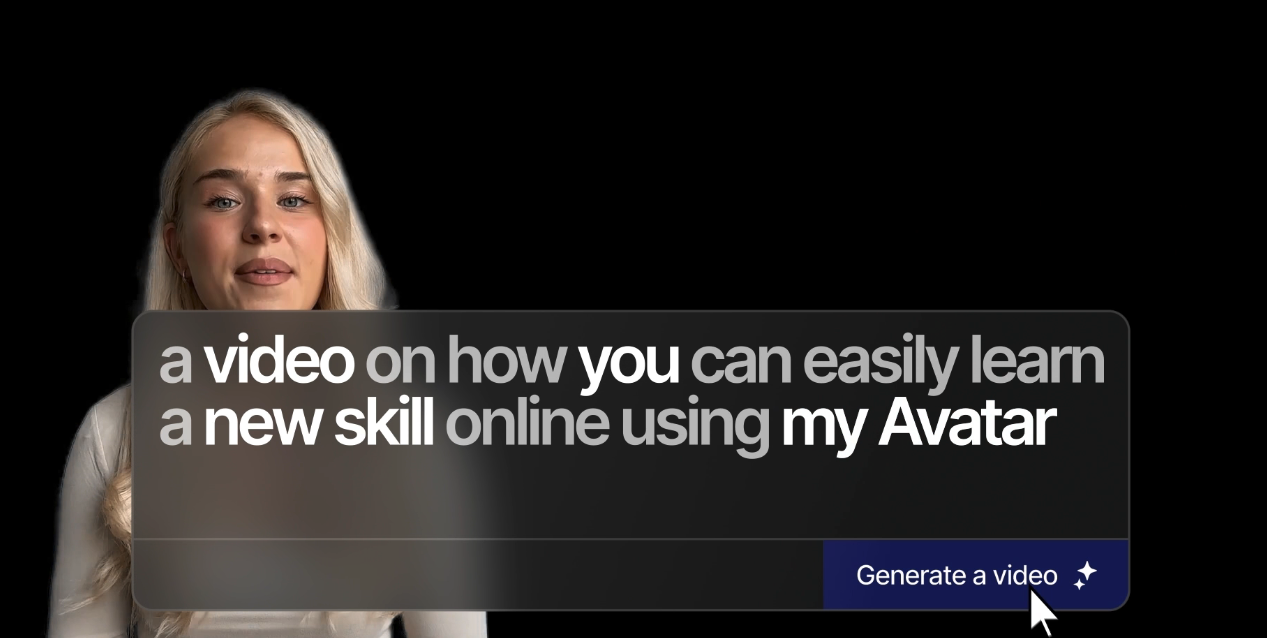
AI avatars are another emerging technology changing how educational videos are produced.
Traditionally, every lesson required the instructor to appear on camera, record the content, and repeat the process whenever updates were needed.
AI avatars introduce more flexibility.
They can help organizations create:
- Employee training videos
- Product tutorials
- Internal education programs
- Multilingual learning content
For example, a global company may need the same training material delivered across different regions. AI avatar technology can help create localized versions without requiring the instructor to record every variation manually.
While human instructors remain essential for expertise and connection, AI avatars provide additional options for scalable educational content.
AI Is Making eLearning More Global Through Localization
One of the biggest opportunities created by AI is making education accessible to wider audiences.
Previously, translating an online course into multiple languages required significant time and resources.
AI-powered workflows are helping simplify localization through:
- Automated transcription
- Translation assistance
- AI voice generation
- Subtitle creation
- AI dubbing
This means educators can potentially reach learners in different regions without rebuilding entire courses from the beginning.
For businesses creating professional training programs, this creates new opportunities to deliver consistent learning experiences across global teams.
AI Video Editing Is Improving Course Production Quality
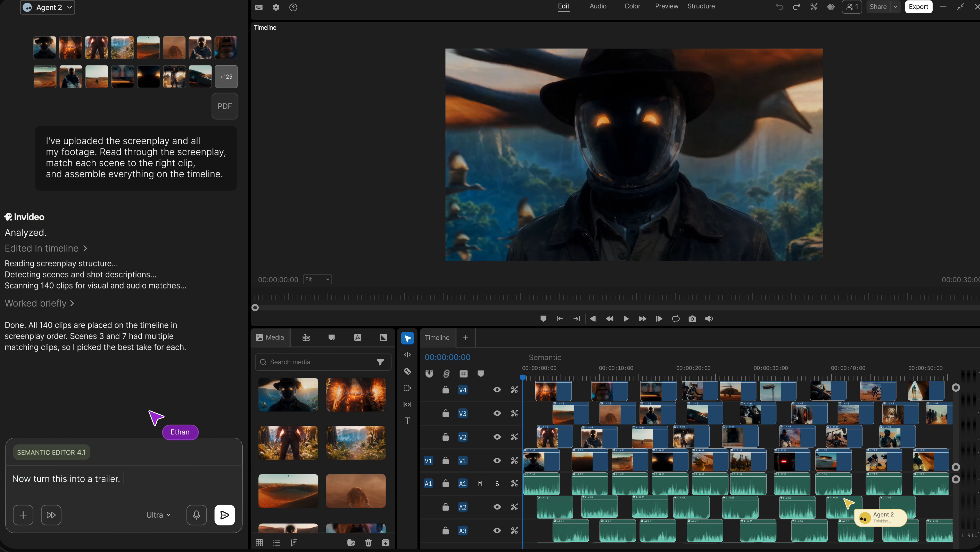
While AI is changing content planning and generation, video editing remains one of the most important parts of course production.
A well-recorded lesson still needs refinement before publishing.
AI-powered editing workflows help creators improve videos by reducing repetitive manual work.
With tools like invideo Editor, tutors can work within a timeline-based editing environment to organize footage, refine lessons, adjust visuals, and prepare professional-looking videos.
Features such as AI-assisted editing workflows, captions, audio improvements, and flexible video formatting help creators spend less time managing technical tasks and more time improving the learning experience.
AI Will Enable More Personalized Learning Experiences
The future of eLearning will likely move beyond one-size-fits-all courses.
AI can help create more personalized educational experiences by adapting content based on learner needs.
Future possibilities include:
- Different explanations for different learning levels
- Personalized examples
- AI-generated practice materials
- Adaptive lesson recommendations
For example, a beginner learner and an advanced learner may require different explanations of the same concept.
AI could help educators create learning paths that better match individual needs.
Human Creativity Will Remain at the Center of Education
Although AI is transforming course production, successful education still depends on human expertise.
AI can assist with:
- Production speed
- Content organization
- Visual creation
- Editing assistance
But educators remain responsible for:
- Teaching concepts
- Sharing experience
- Understanding learners
- Creating meaningful lessons
The most effective future workflow will combine human knowledge with AI-powered assistance.
Conclusion
AI is changing the future of eLearning video production by making professional content creation more accessible, efficient, and scalable.
From AI-assisted planning and visual generation to AI avatars, localization, and smarter editing workflows, technology is removing many of the barriers that once made course production difficult.
For educators and businesses, the opportunity is not simply to create more videos. It is to create better learning experiences with less production complexity.
As AI continues evolving, the future of online education will belong to creators who combine their expertise with intelligent tools to deliver engaging, personalized, and accessible learning experiences.
Either path works: edit it yourself with invideo, or skip recording altogether with MakeOnlineCourse.
✅ Ready to build your course? → MakeOnlineCourse.com
Related posts
- How to Edit Course Videos Like a Professional Without Hiring a Video EditorPlan, edit, and polish professional online course videos using AI-assisted workflows - no video editor required.
- How to Turn Long Lectures Into Engaging Microlearning Videos Using invideo EditorTurn long lecture recordings into focused, engaging microlearning videos with a structured editing workflow.
- How to Color Grade Your Course Videos for a More Professional LookUse color correction and color grading to make your online course videos look consistent and professional across every lesson.